Verified Heritage Guide | Fact-Checked Ground Team
Published by: Ujjain Darshan Editorial & Cultural Research Desk (Local Ground Team Since 2010)
Verified Against: Akhil Bharatiya Akhada Parishad Records & Vedic Astronomical Texts | Updated: August 2026
The Ujjain Simhastha Kumbh Mela is one of the world’s largest spiritual gatherings, held once every 12 years along the sacred banks of the Kshipra River. The name “Simhastha” derives from the rare planetary alignment when Jupiter enters the zodiac sign of Leo (Simha Rashi) and the Sun enters Aries (Mesha Rashi). Discover the ancient legend of Samudra Manthan, the traditions of the 13 Akharas, and the cosmic power of the sacred Shahi Snan.
🔱 Simhastha Kumbh Mela Quick Overview
| Simhastha Parameter | Historical & Vedic Details |
|---|---|
| Astrological Alignment | Jupiter in Leo (Simha Rashi) + Sun in Aries (Mesha Rashi) on Chaitra/Vaisakha Purnima |
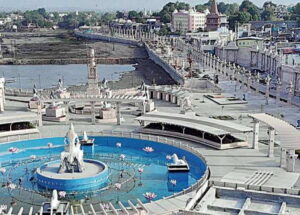
| Primary Bathing River | Holy Kshipra River (Ram Ghat, Dutt Akhada Ghat, Sunhari Ghat) |
| Cycle Frequency | Held once every 12 Years in Ujjain |
| Last Held Year | 2016 (April 22 – May 21) |
| Next Upcoming Simhastha | 2028 (Simhastha Mahakumbh) |
| Key Participants | 13 Traditional Akharas, Naga Sadhus, Mahamandaleshwars, & Millions of Devotees |
1. The Three Pillars of Ujjain Simhastha
Legend of Samudra Manthan
During the celestial churning of the ocean, drops of Amrit (nectar of immortality) fell at four sacred places: Ujjain, Prayagraj, Haridwar, and Nashik.
Cosmic Astro Alignment
When Jupiter sits in Simha Rashi (Leo), the waters of the Kshipra River are believed to absorb divine cosmic energies that cleanse all past karmas.
13 Akharas & Shahi Snan
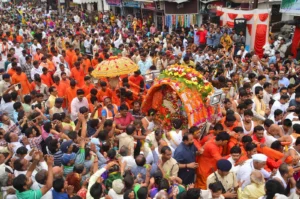
The grand royal processions (Shahi Snan) led by Naga Sannyasis and Mahants of Shaiva, Vaishnava, and Udasin sects mark the pinnacle of faith.
🔥 Special Offer: 50% OFF
Experiencing Spiritual Ujjain Today?
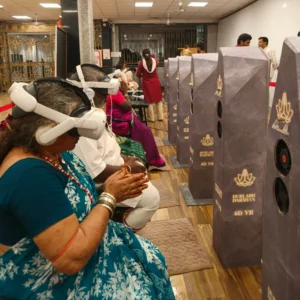
Immortalize your pilgrimage! Experience the divine 4:00 AM live Bhasma Aarti of Lord Mahakaleshwar in life-like 3D/5D Virtual Reality right outside Mahakal Lok Corridor. Pre-book online to save up to 50% on VR tickets.
2. Vedic Origins & Traditions of Simhastha
📜 The Amrit Kalash Legend
According to the Skanda Purana and Brahma Purana, during the fight between Devas (demigods) and Asuras (demons) for the pot of immortality (Amrit Kalash), Lord Vishnu’s carrier Garuda flew with the nectar vessel for 12 divine days (equivalent to 12 human years). During the chase, four drops fell on earth—making Ujjain’s Kshipra riverbank one of the most sacred spots in creation.
✨ Why Ujjain is Unique (Mokshapuri & Greenwich of Ancient India)
Ujjain (ancient Avantika) holds special spiritual prominence as it sits at the intersection of the Tropic of Cancer and the prime meridian of ancient Indian astronomy. It is one of the seven Saptapuri cities that grants Moksha (liberation from the cycle of birth and death).
🌊 The Sacred Rituals & Shahi Snan
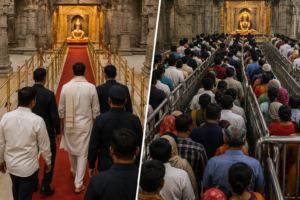
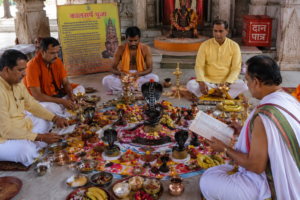
During Simhastha, taking a holy dip at Ram Ghat or Dutt Akhada Ghat during the appointed royal bathing days (Shahi Snan) is believed to eradicate sins of multiple lifetimes. Devotees also offer prayers at Mahakaleshwar Temple, Harishiddhi Mata, and Kal Bhairav during their visit.
❓ Frequently Asked Questions
When is the next Simhastha Kumbh Mela in Ujjain?
The next Ujjain Simhastha Mahakumbh will take place in 2028, following the 12-year cycle from the last 2016 event.
Why is Ujjain’s Kumbh Mela named ‘Simhastha’?
It is named ‘Simhastha’ because it occurs when Jupiter resides in the astrological sign of Leo (Simha Rashi) along with the Sun in Aries (Mesha Rashi).
Which river is central to Ujjain Simhastha Kumbh?
The holy Kshipra River, particularly Ram Ghat and Dutt Akhada Ghat, is the primary center for sacred bathing and Shahi Snans during Simhastha.
🚗 Planning Your Ujjain Yatra & Vedic Poojas?
Our local travel desk and pandit network assist devotees with seamless logistics and authentic Vedic rituals in Ujjain:
- Authentic Dosh Poojas: Mangal Dosh Pooja, Kalsarp Dosh Nivaran, & Pitra Dosh Shanti by certified Ujjain Pandits
- Special Vedic Jaap Services: Navgrah Jaap, Mahamrityunjaya Jaap, & Maa Baglamukhi Anusthan
- Clean hotel accommodations within walking distance of Mahakal Lok Corridor
- Local taxi pickups/drops from Ujjain Junction and Indore Airport
- Customized 1-Day & 2-Day Temple Circuit Sightseeing Packages
7201092290
🛕 Visiting Mahakaleshwar?
Couldn't secure an early morning physical Bhasma Aarti pass at Mahakal? Experience the divine ritual in immersive 3D/5D Virtual Reality right inside the temple complex.
👉 Check VR Bhasma Aarti Timings & Slots