Verified Temple Guide | Fact-Checked Local Ground Team
Published by: Ujjain Darshan Editorial Desk (Local Ground Team Since 2010)
Verified Against: Temple Trust & Local Priest Associations | Updated: July 2026
Situated across the sacred Kshipra River along the Fatehabad railway line road, Chintamani Ganesh Temple is one of the most celebrated Ganesha shrines in Madhya Pradesh. The word ‘Chintamani’ translates to “the reliever of worries.” Devotees flock to this ancient, self-manifested (Swayambhu) temple to seek freedom from worldly anxieties, offer Modak prasad, and pray for auspicious beginnings for new business ventures, marriages, and family wellbeing.
🐘 Chintamani Ganesh Temple Details at a Glance
| Details | Information |
|---|---|
| Opening Timings | 5:00 AM to 10:00 PM (Daily) |
| Main Morning Aarti | 6:30 AM |
| Main Evening Aarti | 8:00 PM |
| Entry Fee | FREE (General Queue) |
| Key Festivals | Ganesh Chaturthi, Wednesdays, Jatra Melas in Chaitra month |
| Distance from Mahakaleshwar | Approx. 7 km (18-22 minute drive via Auto / Cab) |
1. Key Features & Spiritual Significance
Trio of Swayambhu Idols
The sanctum houses three self-manifested idols side-by-side: Chintamani Ganesh (remover of worries), Icchamani Ganesh (fulfiller of desires), and Siddhimani Ganesh (bestower of success).
Ramayana Treta Yug Legend
According to regional lore, Lord Rama, Lakshmana, and Goddess Sita worshipped Lord Ganesha at this exact spot during their exile, creating the nearby ‘Kavant Kund’ water tank.
Special Wednesday Prayers
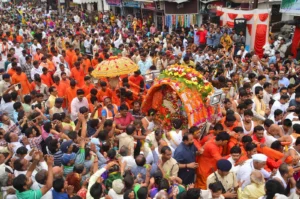
Wednesdays are considered exceptionally auspicious here. Thousands offer Durva grass, Ladoo/Modak prasad, and reverse Swastika marks behind the temple wall for granting wishes.
🔥 Special Offer: 50% OFF
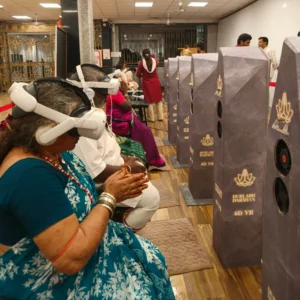
Complete Your Pilgrimage with 3D/5D VR Bhasma Aarti!
Visiting Ujjain’s sacred shrines like Chintamani Ganesh? Make your trip complete with Lord Shiva’s blessings at Shri Mahakaleshwar Temple. If you missed out on getting early-morning passes for the 4:00 AM Bhasma Aarti, experience it in high-definition 360° Virtual Reality right near Mahakal Lok. Pre-book online to get up to 50% discount.
2. Practical Visitor Tips for Chintamani Ganesh
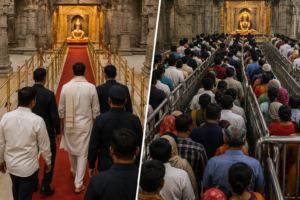
- Wednesday Rush: Wednesdays witness heavy rush and queues. If visiting on a Wednesday, early morning (6:00 AM – 8:00 AM) is the best time for peaceful darshan.
- Ulta Swastika Ritual: A popular tradition involves drawing a reverse Swastika with vermillion/turmeric on the temple back-wall when asking for a wish, and returning to draw a straight Swastika once fulfilled.
- Prasad Availability: Fresh sesame modaks, besan ladoos, and Durva grass are readily available at standard prices from shops near the outer entrance gates.
- Travel Routing: Located slightly away from the core city center (7 km), hiring a round-trip auto or cab is recommended if combining with other suburban shrines like Triveni Navgrah Temple.
❓ Frequently Asked Questions
What makes Chintamani Ganesh Temple unique?
It is one of the few temples housing three self-manifested idols of Ganesha side-by-side representing Chintamani (remover of worries), Icchamani (fulfiller of desires), and Siddhimani (giver of success).
How far is Chintamani Ganesh Temple from Mahakaleshwar Temple?
It is approximately 7 km away from Shri Mahakaleshwar Temple and takes around 18–22 minutes by auto-rickshaw or taxi.
Is there any ticket or entry fee for darshan?
No, general queue entry to Chintamani Ganesh Temple is completely free for all devotees.
🚗 Planning Your Ujjain Yatra & Vedic Poojas?
Our local travel desk and pandit network assist devotees with seamless logistics and authentic Vedic rituals in Ujjain:
- Authentic Dosh Poojas: Mangal Dosh Pooja, Kalsarp Dosh Nivaran, & Pitra Dosh Shanti by certified Ujjain Pandits
- Special Vedic Jaap Services: Navgrah Jaap, Mahamrityunjaya Jaap, & Maa Baglamukhi Anusthan
- Clean hotel accommodations within walking distance of Mahakal Lok Corridor
- Local taxi pickups/drops from Ujjain Junction and Indore Airport
- Customized 1-Day & 2-Day Temple Circuit Sightseeing Packages
7201092290
🛕 Visiting Mahakaleshwar?
Couldn't secure an early morning physical Bhasma Aarti pass at Mahakal? Experience the divine ritual in immersive 3D/5D Virtual Reality right inside the temple complex.
👉 Check VR Bhasma Aarti Timings & Slots