Order of Precedence of India List 2026 | Rank, Protocol & VIP Hierarchy
The Order of Precedence of India is an official hierarchy that ranks constitutional authorities, government officials, and dignitaries for ceremonial purposes. It is determined by the President of India and maintained by the Ministry of Home Affairs. This order is used only during state and formal occasions and does not affect daily governance.
What is the Order of Precedence of India?
The Order of Precedence is a structured protocol list that defines the ranking of officials and dignitaries in India. It ensures uniformity during:
- State functions
- Official ceremonies
- Government events
- Diplomatic gatherings
It is important to understand that this hierarchy does not indicate power or authority, but rather ceremonial importance and seating order.
The list is officially established by the President of India and regularly maintained by the Ministry of Home Affairs.
Why is the Order of Precedence Important?
The Order of Precedence helps in:
- Determining seating arrangements
- Deciding speaking order in events
- Managing protocol during state visits
- Ensuring respect and uniformity
Without such a system, official events could become disorganized and controversial.
Order of Precedence of India – Complete List (Top Ranks)
Below is a simplified and structured version of the official hierarchy:
Top Constitutional Positions
- President of India
- Vice President of India
- Prime Minister of India
High-Level Constitutional Authorities
- Governors of States (within their respective states)
- Former Presidents
- Deputy Prime Minister (if any)
Judiciary & Legislative Heads
- Chief Justice of India
- Speaker of Lok Sabha
- Cabinet Ministers of the Union
Senior Political & Government Leaders
- Chief Ministers (within their respective states)
- Former Prime Ministers
- Leaders of Opposition (Lok Sabha & Rajya Sabha)
Important Administrative & Constitutional Authorities
- Union Ministers of State (Independent Charge)
- Deputy Chairman of Rajya Sabha
- Deputy Speaker of Lok Sabha
Senior Bureaucrats & Officials
- Cabinet Secretary
- Chiefs of Armed Forces (Army, Navy, Air Force)
- Ambassadors and High Commissioners
Other Key Positions
- Members of Parliament
- State Ministers
- Judges of High Courts
- Senior civil and defense officers
Key Points to Understand
✅ Ceremonial Purpose Only
The Order of Precedence is not related to governance power. For example, a Chief Minister may have more administrative authority in their state but still rank differently in protocol.
✅ Location-Based Ranking
Certain positions (like Governors and Chief Ministers) rank differently within their own state vs outside.
✅ No Role in Daily Governance
The system is not used in decision-making or administration.
Common Misconceptions
❌ It defines who is more powerful → Incorrect
✔ It only defines ceremonial importance
❌ It affects government functioning → Incorrect
✔ It is only used in formal events
❌ Anyone can claim protocol benefits → Incorrect
✔ Strict rules and verification apply
Relevance in Bhasma Aarti & VIP Access
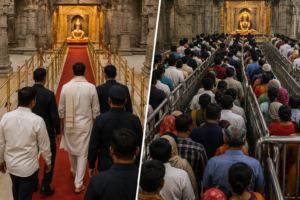
The Order of Precedence is often referenced in protocol-based access for special events like:
- VIP darshan
- Temple protocol entries
- Government-arranged visits
Only individuals with valid recommendation letters from eligible authorities can use such privileges.
FAQs
Q1. Who decides the Order of Precedence in India?
It is determined by the President of India and maintained by the Ministry of Home Affairs.
Q2. Is the Order of Precedence related to power?
No, it is purely ceremonial and does not reflect actual governing authority.
Q3. Where is the Order of Precedence used?
It is used in state ceremonies, official events, and diplomatic functions.
Q4. Can common citizens use this for VIP access?
No, only eligible individuals with proper authorization can benefit from protocol privileges.
Q5. Is the list updated regularly?
Yes, it may be revised by the government based on structural or constitutional changes.
The Order of Precedence of India plays a crucial role in maintaining dignity, structure, and discipline during official events. While it may seem like a power ranking, it is actually a protocol framework designed for respect and organization.
Understanding this system is especially useful when dealing with VIP access, ceremonial events, or government protocols, ensuring clarity and avoiding misinformation.
🛕 Visiting Mahakaleshwar?
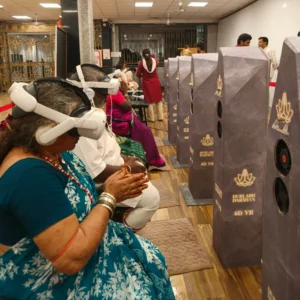
Couldn't secure an early morning physical Bhasma Aarti pass at Mahakal? Experience the divine ritual in immersive 3D/5D Virtual Reality right inside the temple complex.
👉 Check VR Bhasma Aarti Timings & Slots