Verified Spiritual & Historical Archive | Authentic Local Heritage Desk
Published by: Ujjain Darshan Historical & Cultural Information Cell (Operating Since 2010)
Fact-Checked Against: Ancient Puranic Texts, Archaeological Records & Vikram University Archives | Updated: August 2026
History of Ujjain (Avantika): Ancient Legends, Royal Dynasties & Sacred Heritage
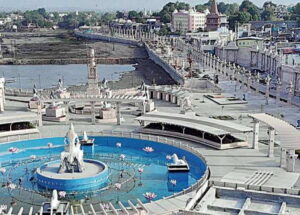
Ujjain, historically known as Avantika, Avanti, Ujjayini, and Padmavati, is one of the oldest continuously inhabited cities in the world and one of the seven sacred Sapta Puri cities of Hinduism. Situated on the holy banks of the Shipra River, Ujjain has served as a global center for astronomical calculations, Vedic learning, royal dynasties, and the eternal abode of Lord Shiva as Mahakaleshwar Jyotirlinga for over 5,000 years.
🏛️ Ujjain Historical Timeline at a Glance
| Era / Empire | Historical Significance & Contribution |
|---|---|
| Puranic & Vedic Period | Known as Avantika Puri; home to Maharshi Sandipani Ashram where Lord Krishna learned 64 arts. |
| Avanti Kingdom (6th Century BCE) | One of the 16 Great Mahajanapadas ruled by King Chanda Pradyota. |
| Mauryan Dynasty (3rd Century BCE) | Emperor Ashoka served as the Viceroy (Governor) of Avanti prior to taking the throne at Pataliputra. |
| Golden Age of Vikramaditya (1st Century BCE) | King Vikramaditya established the Vikram Samvat calendar (57 BCE); court graced by Nine Gems (Navaratnas) including Kalidasa and Varahamihira. |
| Gupta & Paramara Empires | Flourished as a global hub for Sanskrit literature, arts, and astronomy under Raja Bhoj. |
| Maratha Era (18th Century CE) | Ranoji Scindia rebuilt Mahakaleshwar Temple and resurrected ancient temples destroyed during medieval invasions. |
1. Sacred Origins: Samudra Manthan & The Nectar of Immortality
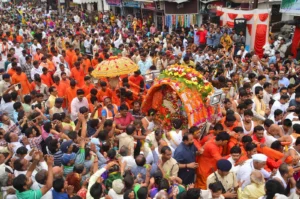
According to Hindu scriptures (Skanda Purana), Ujjain is intimately tied to the celestial event of Samudra Manthan (Ocean Churning). As Garuda carried the Amrit Kalash (pot of divine nectar) across the heavens, four drops of divine nectar fell upon the Earth—one of which landed at the Ram Ghat on the banks of the Shipra River in Ujjain. This legend forms the spiritual foundation for the world-famous Simhastha Kumbh Mela, held here every 12 years.
2. The Prime Meridian & Astronomical Hub of Ancient India
Long before Greenwich was designated as the Prime Meridian, Ujjain was recognized as the Greenwich of Ancient World Astronomy. Located precisely on the intersection of the Tropic of Cancer and the 0° ancient Indian meridian:
- Center of Time (Kaal): Lord Mahakal is worshipped as the supreme deity of time and space, symbolizing Ujjain’s position as the cosmic epicenter.
- Varahamihira & Brahmagupta: Renowned ancient mathematicians and astronomers conducted planetarium calculations and eclipse forecasts from Ujjain.
- Jantar Mantar (Vedh Shala): Constructed in the 18th century by Maharaja Jai Singh II of Jaipur, this historic observatory still functions today to compute Hindu Panchang calculations.
🔥 Special Offer: 50% OFF
Exploring Ujjain’s sacred history first-hand?
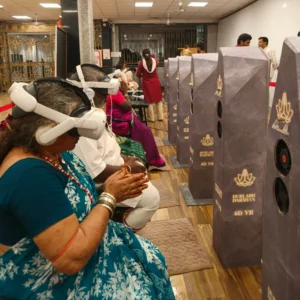
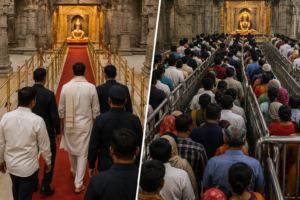
Complete your heritage tour with divine blessings at Mahakaleshwar Jyotirlinga! If physical Bhasma Aarti passes are sold out during your visit, experience the complete early morning ritual in breathtaking 3D/5D Virtual Reality right outside Mahakal Lok Corridor with up to 50% discount.
❓ Frequently Asked Questions
What are the different historical names of Ujjain?
Throughout ancient literature, Ujjain has been called Avantika, Avanti, Ujjayini, Padmavati, Amaravati, and Kanakashringa.
Who was King Vikramaditya and what is Vikram Samvat?
King Vikramaditya was a legendary ruler of Ujjain known for his justice and wisdom. He founded the Vikram Samvat Hindu era calendar in 57 BCE after defeating the Saka invaders.
Which historic monuments in Ujjain can tourists visit today?
Key heritage sites include Mahakaleshwar Mandir, Sandipani Ashram, Bhartrihari Caves, Kal Bhairav Temple, Vedh Shala (Observatory), and Ram Ghat on the Shipra River.
📞 Book Full-Day Historical Heritage Tour Taxi in Ujjain
Explore Ujjain’s ancient landmarks with experienced local drivers who know the city’s rich history and temple corridors:
- Full-Day Sightseeing Cabs: Mahakaleshwar, Sandipani Ashram, Bhartrihari Caves, Vedh Shala & Kal Bhairav
- Airport & Station Transfers: Pickup from Indore Airport (IDR) / Ujjain Railway Station
- Clean AC Vehicles: Sedan, Ertiga, Innova Crysta & Tempo Travellers
7201092290
🛕 Visiting Mahakaleshwar?
Couldn't secure an early morning physical Bhasma Aarti pass at Mahakal? Experience the divine ritual in immersive 3D/5D Virtual Reality right inside the temple complex.
👉 Check VR Bhasma Aarti Timings & Slots